From a physical object to a 3D digital file
Scanning is a precise geometry capture process that produces a 3D model faithful to the real object.
Useful for digitizing components with no 3D model, complex geometries or objects that need to be visually replicated. The resulting file can be printed using the available materials.
From individual parts to complex objects, the focus is on geometric accuracy and faithful shape reproduction.
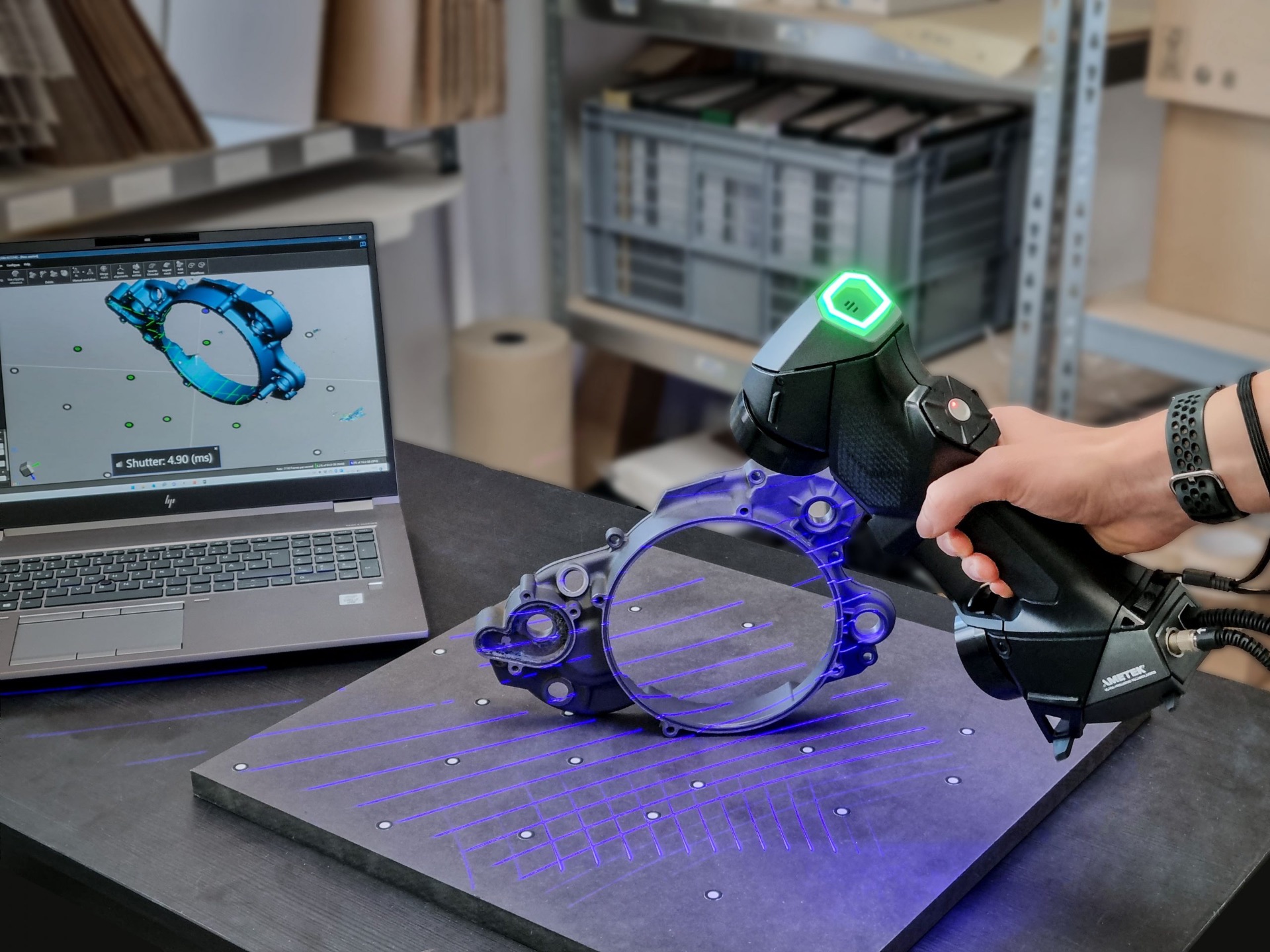
Real examples
Component with no digital model
Physically existing part without a 3D file. Scanned and delivered as a faithful digital model.
Object with complex geometry
Shape hard to measure by hand. Fully captured via scanning.
Part for visual replication
Model used in presentations or renders.
Fully scanned assembly
Components captured together, preserving geometric relationships.
Object for digital archiving
Shape preserved in digital format.
Scan for dimensional reference
Model used as a comparison baseline.
Manual measurement / CMM vs. 3D scanning — Which is right for you?
| Criterion | Manual measurement / CMM | 3D Scanning (PrintingHub) |
|---|---|---|
| Capture time | Hours to days | Minutes to hours |
| Complex geometry (free-form) | Impossible or approximate | Captured fully and faithfully |
| Final output | 2D sketch / isolated measurements | Complete digital 3D model (STL/STEP) |
| Reverse engineering | Slow reconstruction with errors | Precise geometric base, ready for CAD |
| Digital archiving | Physical documents / drawings | Reusable 3D file at any time |
| Risk to the original part | Repeated handling | Non-contact capture, no wear |
3D scanning replaces weeks of manual measurements with a single digital file — ready for manufacturing, replication or archiving.
Quality, validation and operational ownership
In real-world applications, a component is judged by its performance over time, not its looks. Every part is treated as a functional element.
Materials and production parameters are defined according to the specific loads — mechanical, thermal and operational. Part behavior stays predictable and stable in the end environment.
The process is managed end-to-end: model analysis and validation, optimization for additive manufacturing, controlled production and dimensional verification. Where needed, geometry is tuned for strength and durability.
The result: components usable directly in operations, without intermediate steps — reducing downtime and reliance on internal processes.
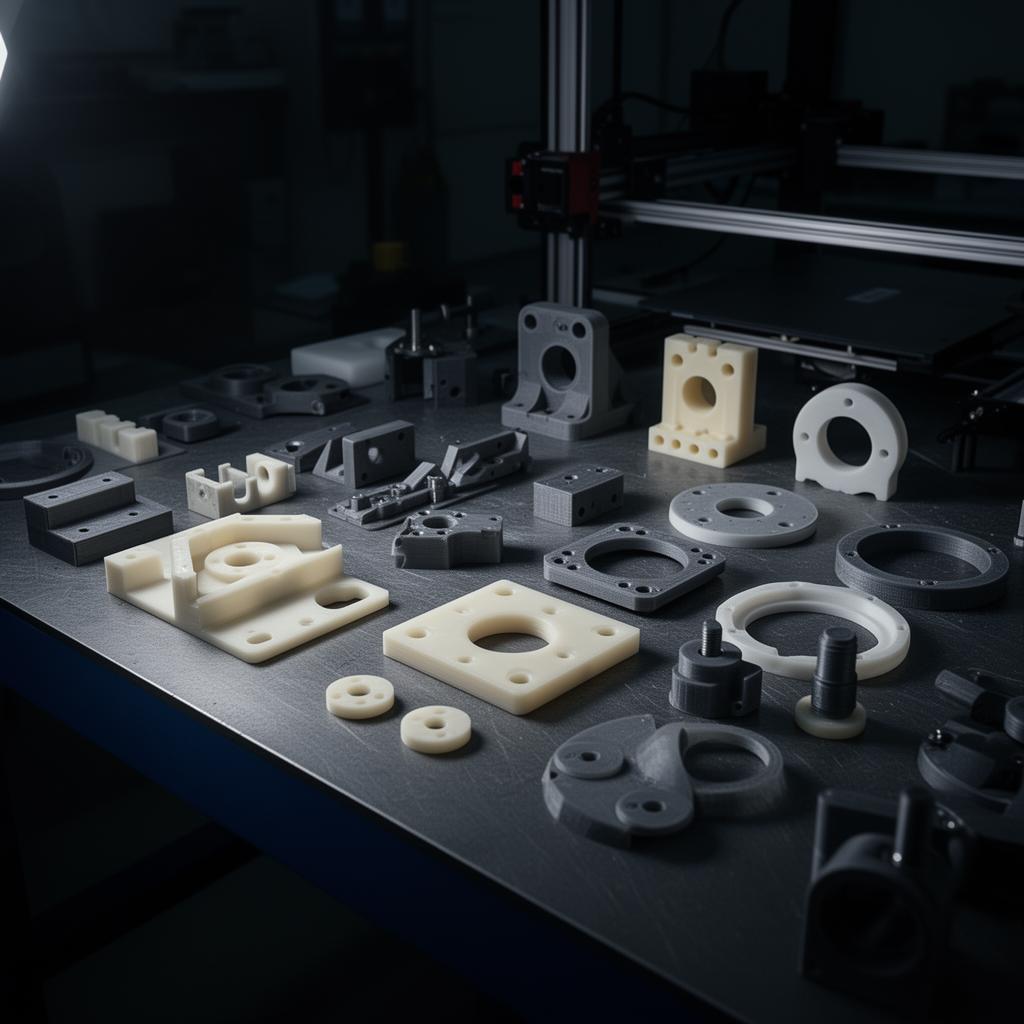
Real examples
Production line fixture
Worn element causing recurring downtime. Redesigned and delivered in 48h, integrated directly into the process.
Unavailable component / long lead time
Critical part with long lead time. Functional alternative delivered in days.
Small batch with no case for tooling
Tens of units produced quickly, no upfront costs, consistent between parts.
Custom jig for R&D testing
Device optimized for repeated use, delivered ready to operate.
Reverse engineering from a physical part
Component without a CAD model. Scanned, reconstructed and adapted for manufacturing.
CNC Shop vs. 3D Printing — Which is right for you?
| Criterion | CNC Shop | 3D Printing agency (PrintingHub) |
|---|---|---|
| Lead time | 5–15 business days | 1–3 business days |
| Cost for small runs / prototype | High (large fixed costs) | Low (no setup costs) |
| Complex geometry | Limited, multiple steps | No cost penalty |
| Design iterations | Expensive and slow | Fast, next day |
| Available materials | Metal, technical plastic | PA12, PETG, PC, carbon fiber |
| Optimal volume | Large runs | Small and medium runs |
For 80% of tooling applications you don't need metal. We deliver functional jigs and fixtures in 24–72h.
High-performance components for real-world loads
In applications where weight, stiffness and structural behavior are critical, composites offer a clear advantage.
We produce components from carbon fiber, fiberglass and kevlar, configured for loads, stress points and real operating conditions.
The process includes molding, controlled layup and techniques like vacuum bagging or autoclave, ensuring uniform compaction, internal integrity and part-to-part repeatability.
The result: optimized structures with reduced weight and predictable in-service behavior.
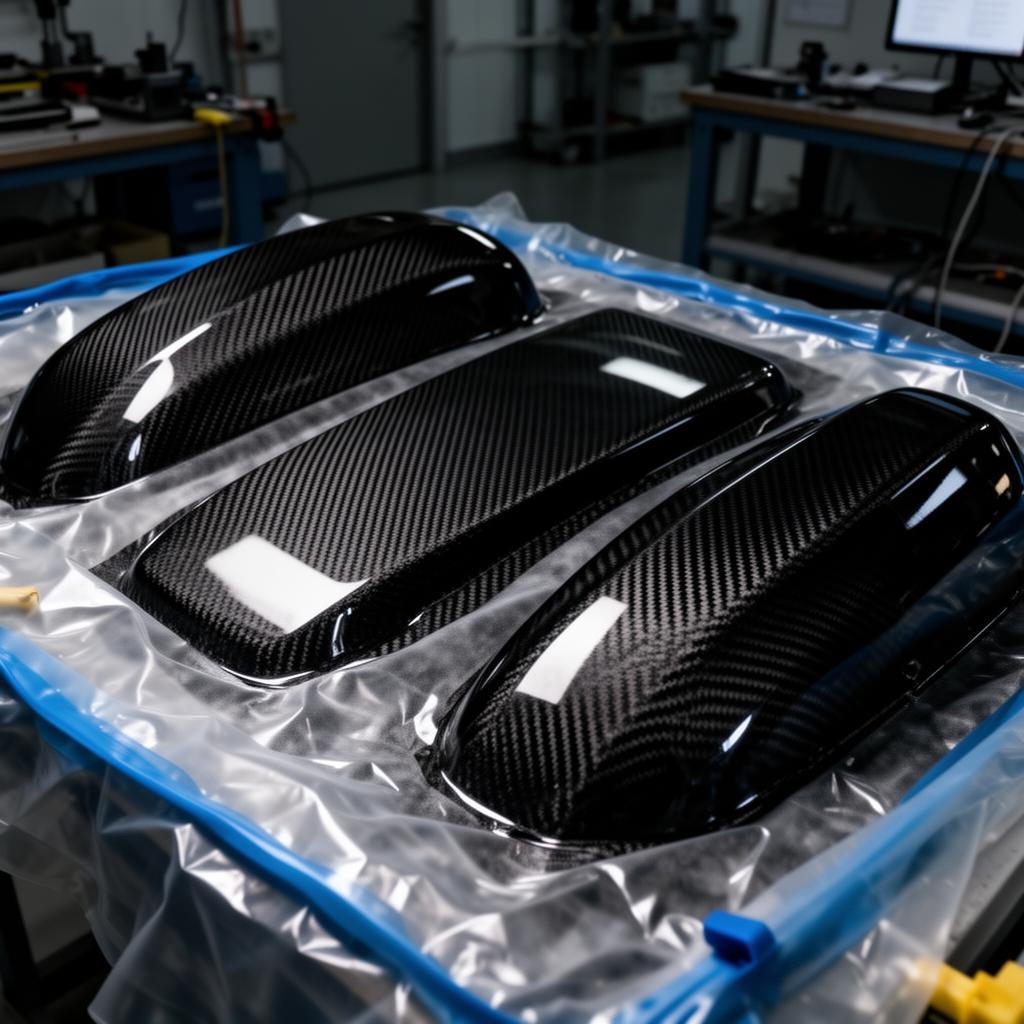
⚙️ Processes used
Molding
Geometric control and consistency.
Vacuum bagging
Uniform compaction and structural control.
Autoclave
High density and superior structural performance.
Plastic / Metal vs. Composites — Which is right for you?
| Criterion | Plastic / classic metal | Composites (PrintingHub) |
|---|---|---|
| Strength-to-weight ratio | Medium — high mass for stiffness | Superior — low weight, high stiffness |
| Behavior under directional loads | Isotropic, no optimization | Layup oriented along the stress direction |
| Manufacturing process | Casting / machining | Molding, vacuum bagging, autoclave |
| Part-to-part repeatability | Good, but depends on machining | High — controlled compaction process |
| Typical applications | General components | High-performance structures, motorsport, drones, R&D |
| Surface finish | Requires additional machining | Smooth surface straight from the mold |
Where every gram counts — composites deliver maximum stiffness at minimum weight, with predictable in-service behavior.
Technical components for automotive and motorcycle applications
Every project starts with a technical consultation: we review operating temperature, vibration, chemical exposure, applied forces and required tolerances.
Based on that data we pick the right material and additive process — from fiber-reinforced polyamides to composites and environment-resistant engineering thermoplastics.
We validate geometry through 3D scanning and deliver each component together with the material datasheet — for traceability and direct integration.
We work on one-offs, restorations, functional prototypes and small runs, focused on real in-service performance.
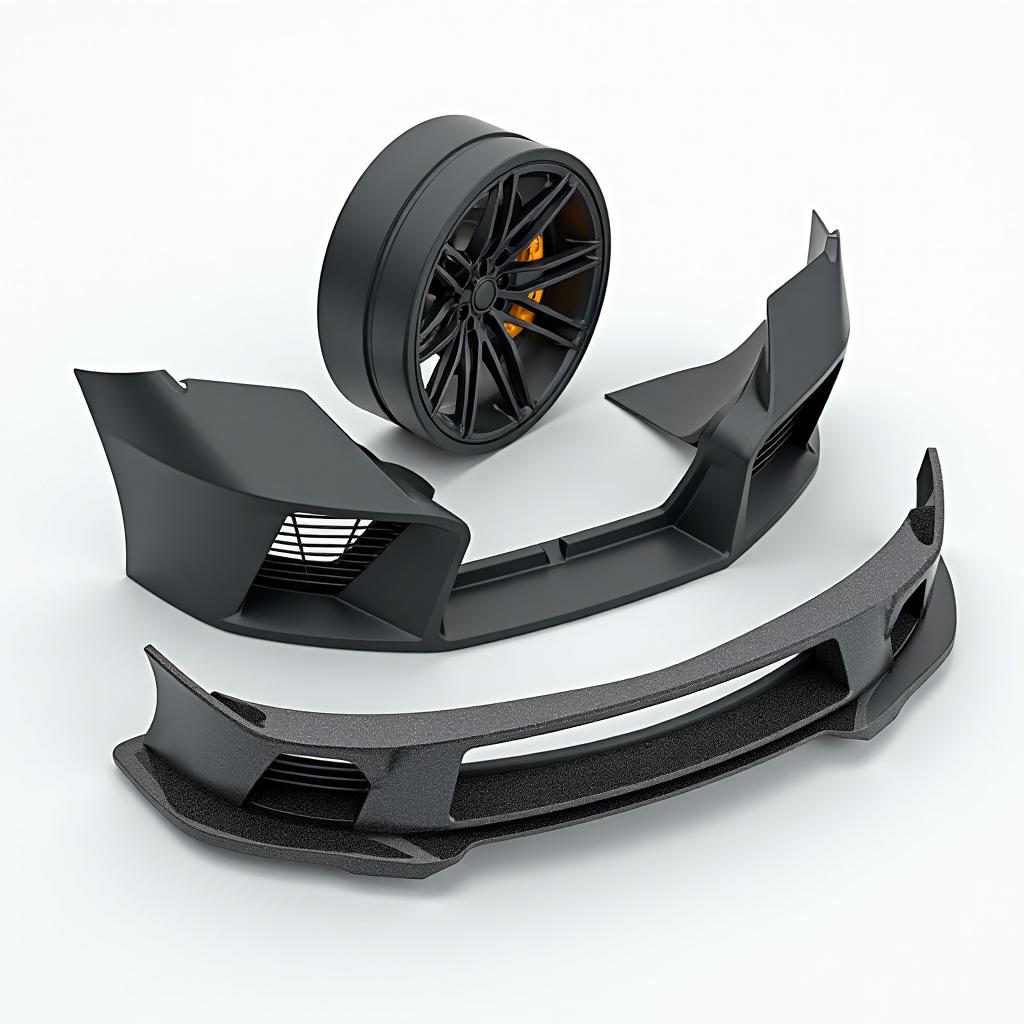
Use cases
Technical mounts
Mounting components sized for real loads and vibration.
Functional housings
Protection for electronics, sensors or auxiliary modules.
Ducts and fittings
Custom geometries for fluids, air or cabling, adapted to the route.
Body parts
Interior or exterior parts, replicated or redesigned for integration.
Custom parts
Unique components for tuning, restoration or one-off projects.
Functional prototypes
Fast validation of solutions before series production or homologation.
Unavailable OEM part vs. Additively manufactured component — Which is right?
| Criterion | OEM / aftermarket part | 3D component (PrintingHub) |
|---|---|---|
| Availability | Long lead time or discontinued | On-demand production, in days |
| Fit for the application | Fixed, generic geometry | Sized for real loads |
| Material selection | Predefined by the manufacturer | Chosen for temperature, vibration, chemicals |
| Dimensional validation | Based on catalog spec | Verified through 3D scanning |
| Technical documentation | Limited | Datasheet delivered with the part |
| Small runs / one-offs | Inefficient or impossible | Optimal — no tooling costs |
From mounts and housings to body parts — every component is sized for its application and delivered with the material datasheet.