Case study
How exhibition components are made — optimized for shipping
1:1 display replicas · Exhibition props · Industrial mockups for trade shows
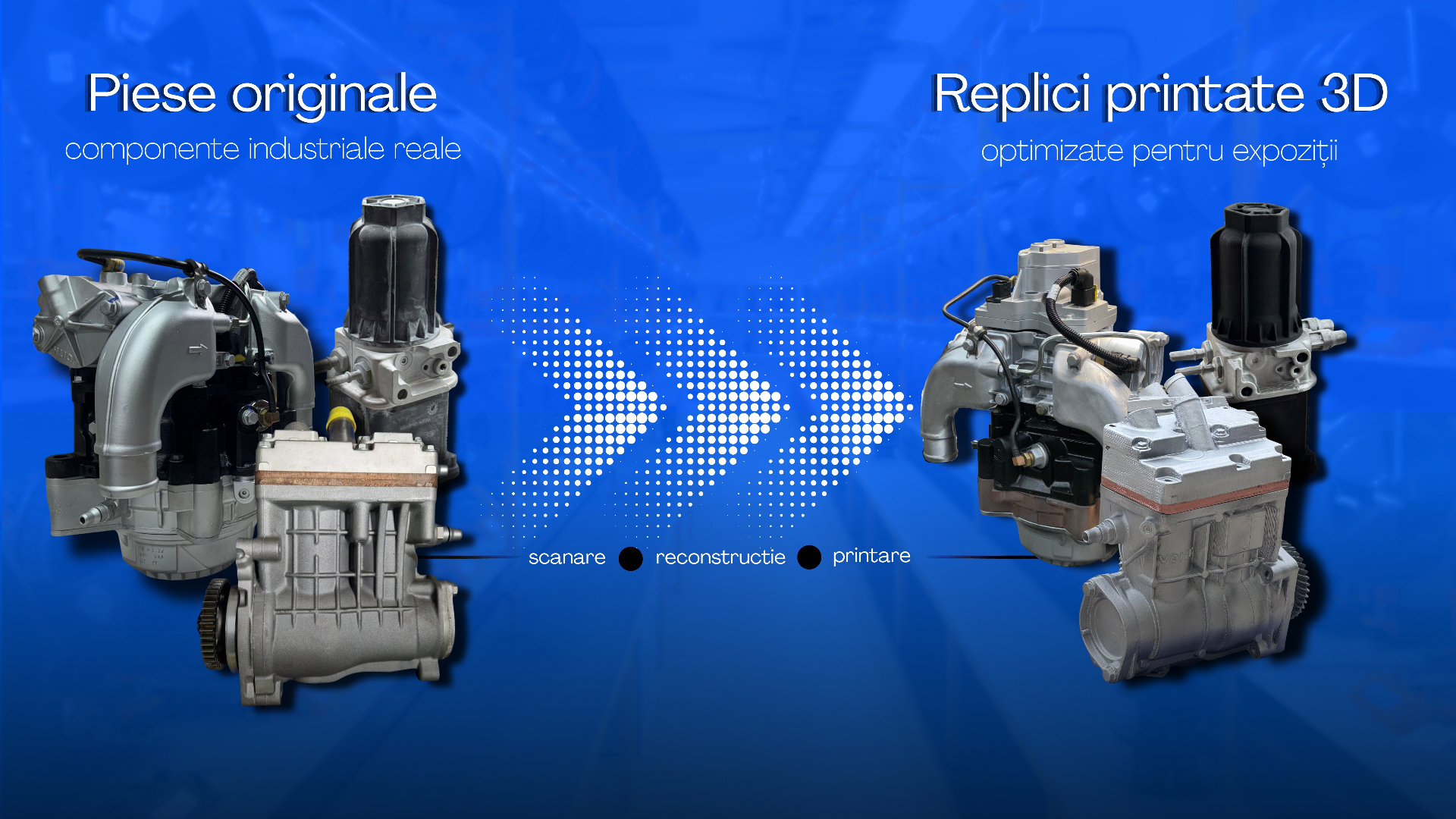
For exhibitions, the object you see on the stand is most of the time different from the real one.
Stand builders, exhibition agencies and industrial companies operate under the same constraints:
- – shipping costs rise quickly with weight
- – handling risk grows with mass and fragility
- – install time is limited and doesn't allow delays
So the question isn't only "what do we show" — it's "how do we make it possible to show this".
In most cases, exhibited components are not functional parts. They're controlled representations, engineered to behave correctly from a logistics standpoint.
This is a standard service in our workflow — building 1:1 replicas, exhibition props and industrial mockups optimized for shipping, assembly and visual impact.
Our process: from a real component to an exhibition-ready replica
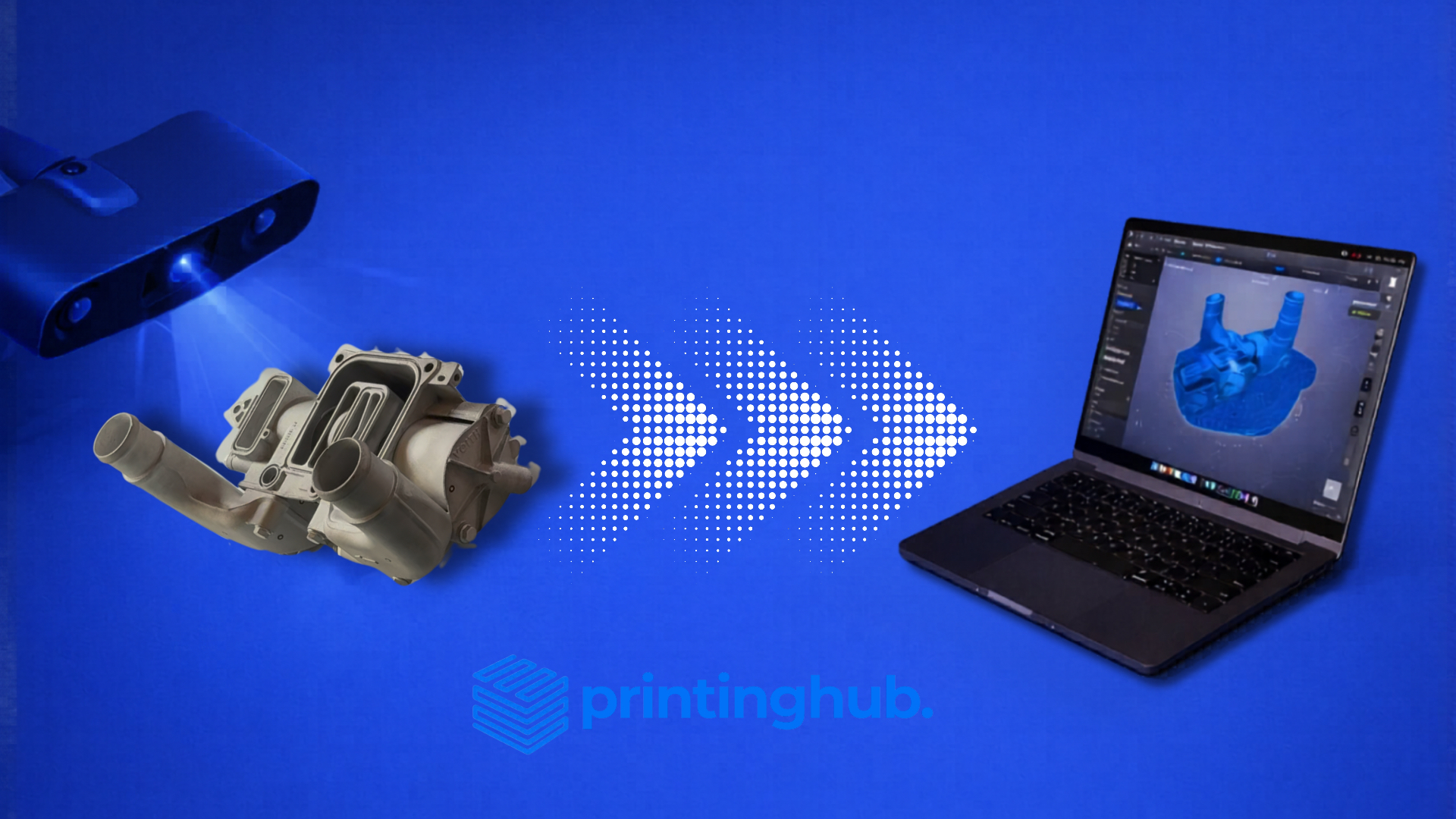
The process follows a clear pipeline:
- – disassembly of the original component to identify the relevant geometry
- – high-precision 3D scanning for faithful capture
- – reconstruction as a modular "puzzle" system for controlled assembly
- – adaptation for large-format 3D printing
- – production and finishing (sanding, painting, surface refinement)
- – packaging optimized for transport, handling and fast install
Why replicas beat real components in exhibitions

At exhibition viewing distance, perception is driven by silhouette, proportion and surface detail — not by material mass.
In an exhibition setting the goal stays constant: maximum visual impact at minimum physical cost.